Category: Uncategorized

  • Teaching Littles About God’s Creation Through “What a Wonderful World”

    Teaching Littles About God’s Creation Through “What a Wonderful World”

    Songs I Sing to Teach Littles About God’s Creation: Part 1
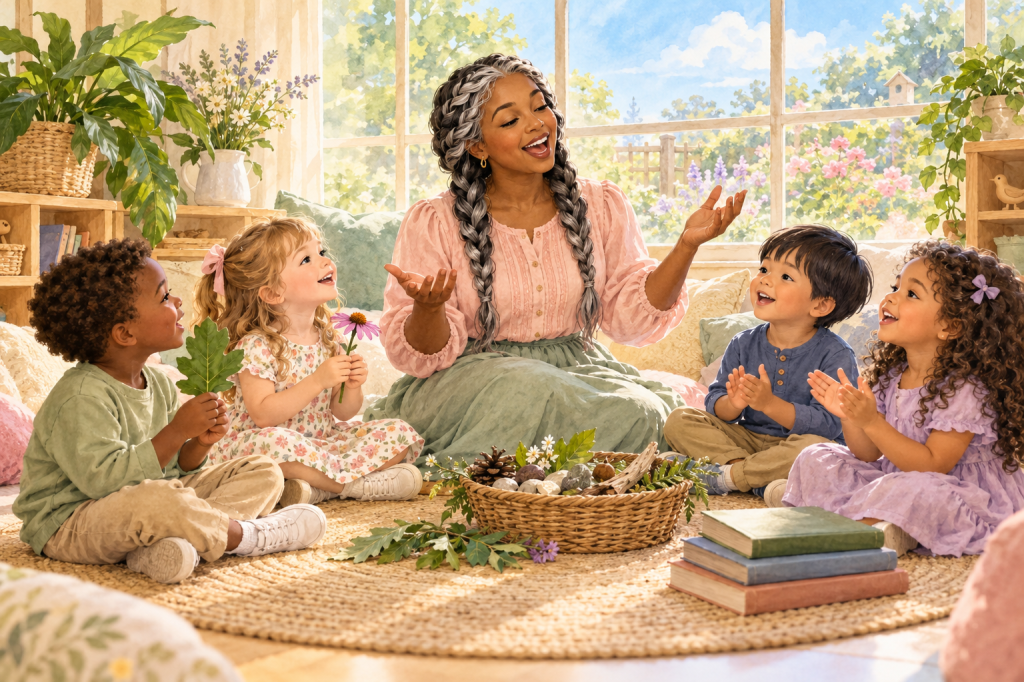
    Sometimes a song invites us to simply slow down, and take notice of the little things. Each word, every lyric describes what we are feeling or taking notice of in a way that simply talking about it just can’t do.

    A growing tree. A budding flower. The blue skies above us. The people around us. We can find songs to describe and tell about all of these things, bringing it closer to our hearts, and deepening it’s meaning. Those melodies and lyrics stay with us, and we will find ourselves and our children replaying those songs for as long as we live and remember them.

    The idea of this led me to begin my new YouTube series, Songs I Sing to Teach Littles About God’s Creation, with “What a Wonderful World,” made famous by Louis Armstrong.

    Through this song, I invite children to listen, observe, wonder, and give thanks to God. We can enjoy music while making meaningful connections to nature, colors, friendship, and the beautiful world God created.

    Watch the video and sing along!

    If you found your way here from my YouTube video or a short clip on social media, welcome! Below, you’ll find simple tips on how you can extend the learning of this song, share a little music history, introduce new musical instruments to your young musicians, and enjoy a free coloring sheet to enjoy with your little ones.

    Bringing the Song Into Your Circle Time or Morning Learning

    I will actually share this song during our Morning Learning time. It is a gentle invitation through music to take notice of the elements in God’s creation. Before singing, we can look at pictures of flowers, leaves, or other pictures of nature (Get my Discovering God’s Creation Nature Cards) and ask:

    • What colors do you see?
    • What have you noticed outside today?
    • What is something God created that makes you smile?

    As we listen together, children can gently sway, stretch their arms up and out like the branches of a tree, or make curved rainbows above their heads. You can also post up different pictures in nature and have your littles point to them as they hear them mentioned in the song…or simply…listen. There is lots of room for every child to participate in their own way.

    Afterward, we pause to name something beautiful we noticed. I connect our conversation to Genesis 1:31, where God looks at what He has made and sees that it is very good.

    Here’s the Children’s Bible we use in our homeschool that I find to be wonderful for all ages, whether reading with you, or listening.

    This song gives a starting place for observation, but it can certainly be used in rotation with other songs that are about creation. Our conversations outside of the songs and the shared lessons bring wonder back to God, our Creator.

    A little story time: Meet Louis Armstrong
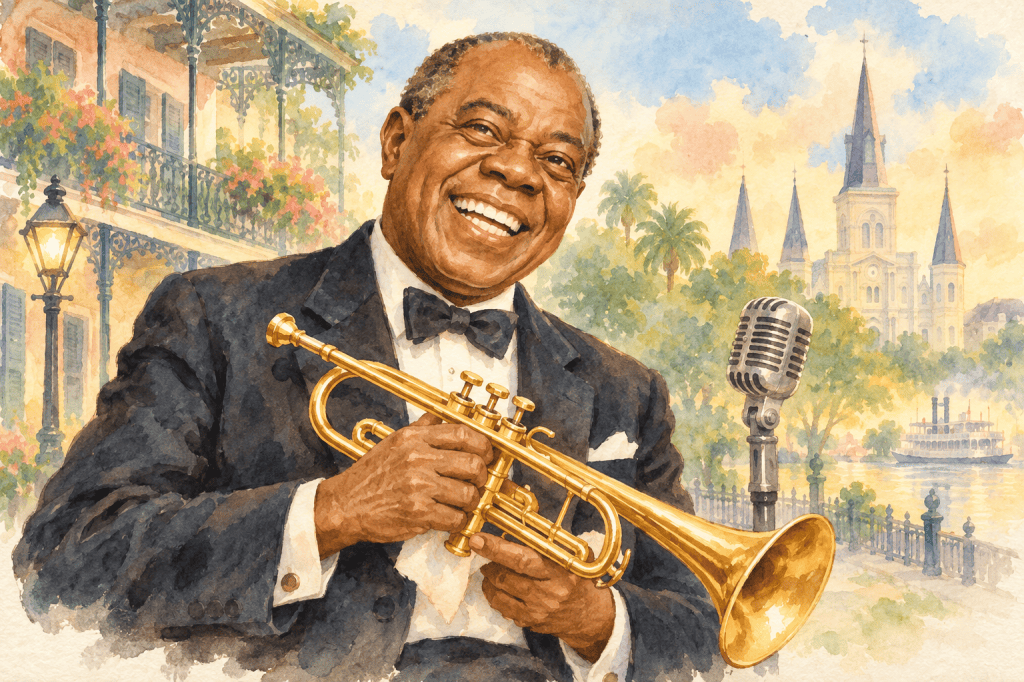
    Here is a book that you can share with your children to extend the lesson. It is meaningful to read it to them and share the pictures. If you cannot get the physical or digital copy to share, now worries! Here is a short introduction you can share with your children:

    “Many years ago, a boy named Louis grew up in New Orleans, Louisiana. He learned to make music with his voice and with instruments called the cornet and trumpet. As he grew, he became a musician known around the world! His name was Louis Armstrong, and he helped shape a style of music called jazz.”

    Louis Armstrong was a Black American trumpeter and singer, and one of the most influential musicians in jazz history. He recorded “What a Wonderful World” in 1967. His recognizable, trumpet-like singing voice is part of what makes the recording so memorable.

    Let’s Explore His Music and Instruments

    Armstrong played both cornett and trumpet. These instruments belong to the brass family. You can show pictures of each and invite them to notice their coiled tubing, valves, and flared bells.

    He was also famous for scat singing – making up musical phrases with playful syllables instead of song lyrics. Here’s where introducing the giftedness of this amazing musician will be a wonderful and exciting experience for children of all ages!

    Try a little musical conversation: sing a short “doo-bah-doo,” let your child echo it, and then invite them to invent their own!

    Although Armstrong is closely associated with jazz, “What a Wonderful World,” is a gentle, slow song. His famous original recording features his singing without him playing the trumpet. To explore his instrumental sound, pair it with a short example of his trumpet playing and ask, “How is the trumpet’s sound different from his voice?”

    Color, notice, and give thanks to God for the gift of music, and the gift of His creation.

    Download the free coloring sheet that accompanies this lesson, and give your child time to create while you revisit the song.

    As you color together, ask:

    What do you notice in your picture?

    What colors would you like to use?

    What else from God’s creation could you draw?

    What would you like to thank God for today?

    You can write down your child’s words or let them tell you about their picture. If you know me, then you know I would also suggest you give them a simple blank sheet of paper, and encourage them to draw their own picture based on what they remember from the lesson. Perhaps they will create a picture of their favorite part of God’s creation…a tree, a flower, the beautiful sky, or of themselves learning outside.

    All of these are wonderful ways for you to encourage them to reflect on what they’ve learned, and store it later in a Learning or Nature Journal/Binder that they can refer to in years to come.

    The ultimate goal is for you children to have and to hold this moment of wonder, connection, creativity, and gratitude.

    Download the Free “Wonderful World” Coloring Sheet

    Take the learning outside.
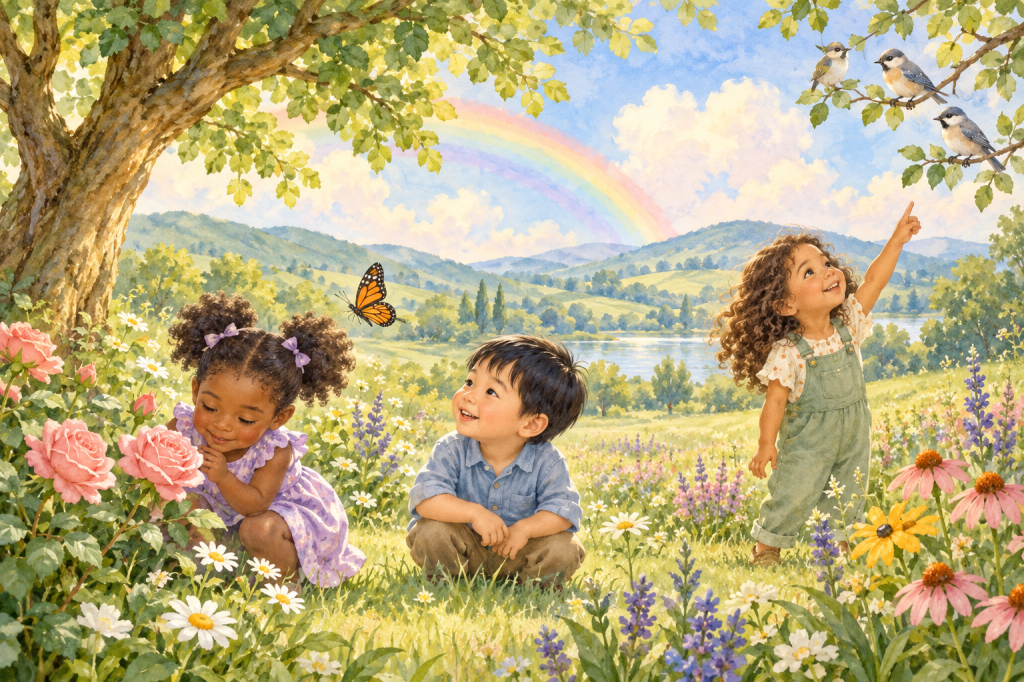
    Finish with a short creation walk. Look for something growing in your own back yard, at the park, or along a trail. Listen for sounds in nature and notice a color you used in your picture.

    As you walk with your children, encourage them to say a prayer, thanking God for all the beautiful things in creation that they see.

    “Thank You, God, for the beautiful world You made. Help us notice Your creation, care for it, and love the people around us. Amen.”

    I’m so glad you’re learning with me! Join me on YouTube at @mrsmastersmusicclass for more songs and simple ways to help teachers, families and young musicians everywhere learn.

    With love always💕

    Mrs. Masters

    Worship, Sing, Learn & Grow

    *The history details in this post are supported by the Louis Armstrong House Museum and Smithsonian, including his cornet and trumpet playing, scat singing, and the absence of his trumpet on this recording.

  • Is Your Little One too Young to Start Piano Lessons?

    Is Your Little One too Young to Start Piano Lessons?

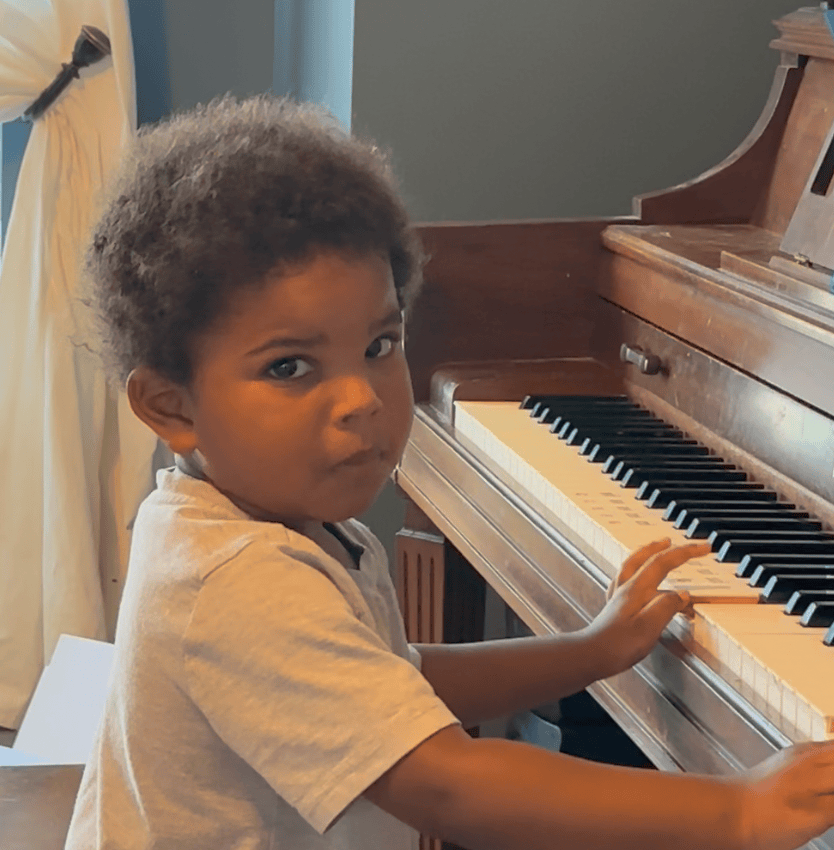
    Quite often, parents ask me this same question, “is my child too young to start taking piano lessons?” I’m here to share with you what three simple signs you can look for in your child, to indicate they may or may not be ready for you to get them started in music lessons!

    Music lessons are considerate a luxury in most households, and in today’s economy, almost every household. When I was a child, my mother invested in piano teachers and music camps with the best teachers and schools in and around our community. I am a product of not only the God-given gift and talent of music, but I was blessed to be well trained by some of the best teachers and professors all the way through college.

    What I do today embodies the passion I have to see children of all economic backgrounds, cultures and ethnicities experience what I did in my youth. What most children cannot afford, or may not see in their schools, I desire to bring it right where they are, in every part of the world! If you’d like to know more about the music school I started, and how you can help me give that gift and share the ministry of music with families everywhere, please take a moment to visit youngmusicianacademyonline.com.

    Now, back to this blog post! No matter where you are in your decision to invest in music lessons for your young child, there’s a very good chance you could be hesitant because you don’t know the signs that confirm a your child is ready for private or group piano instruction.

    I’m going to list the three key indicators in your child’s development that they are indeed ready for a music lessons:

    First, make sure your child knows their right hand, from their left hand. This step is most important when introducing a young child to the piano, because learning to play with both hands together can become confusing by itself! When a child can confidently identify their right and left hand from each other, they are one step closer to being able to comfortably learn basic piano technique!

    The second thing you want to be sure your child knows, is his or her alphabet. The good old ABC’s! Whether they can recite them or sing them, as long as they know them well, this is going to help them as they learn the Musical Alphabet, and begin to navigate each note name on the piano. If you are looking for a simple video lesson on the Musical Alphabet, check out my very 1st episode about the Music ABCs on my channel, here!

    Lastly, if your child is counting from 1-10 with ease, then they are clear to begin piano lessons! These three milestones come at different times for every child, so don’t pressure them, let them show you they are ready 🙂 My younger children are currently two, two (twins 😉 3 and 5. While I’ve chosen to offer my 5-year old a full lesson, I am simply welcoming the other three littles to the idea of playing by allowing them to explore the piano freely. My husband and I are both musicians, but we agreed to allow all of our children to come into playing music when they are ready, and based on their interest. I feel this method and approach is best with all children. No pressure, enjoy the journey from the start!

    One of the first lessons I teach my youngest students on the piano is correct hand and finger position. We then learn our finger numbers, and begin playing exercises that strengthen the fingers. Little fingers are too weak to play one note at a time starting out!

    If you are reading this, and you have a little one you are interested in “trying” out piano lessons with, consider enrolling them in my “Preschool Private Piano Lesson.” My classes are offered virtually, and I currently teach students all over the world! My methods are tried and true, and I make learning fun for every age! When booking a first lesson with me, enter this code: FreePreschoolFun at check out to receive your first lesson completely free!

    If you’re a music teacher, feel free to share your methods for making sure little hands and fingers are ready to learn the piano below!

    Would you like to support my work? Buy me a chai latte✨Every resource I create, and lesson I share can reach many more with the help of supporters like you.

  • Teaching Young Singers to HARMONIZE!

    Teaching Young Singers to HARMONIZE!

    This week in one of my Group Singing Classes, I was met with a familiar challenge, teaching young singers to harmonize! I can remember distinctively during my classroom teaching years…lol…not so long ago – having to use “Rounds” to train young ears to hear and sing different parts at once.

    In our lesson, I used a simple round to train my young voices to learn one melodic line, before teaching them to sing it simultaneously. We started by learning to sing the same melody together. We learned the lyrics and the rhythm. We then broke into three different groups and learned to come in at different times rhythmically. Helping them to know when exactly to come in proved to be a greater challenge than them actually singing at different times!

    The students in my Group Singing Class were amazed at how this exercise helped them sing different parts at the same time! They learned key skills needed to begin hearing and singing different notes in harmony together. This is just one of many lessons I’ll teach to prepare them for harmonizing together. I love this YouTube video taken from an older, Classic episode of Sesame Street! This is the song I taught my students, and I’ve even shared a link on the Music for Music Teachers website of the sheet music by John Hilton in the key of C Major for this particular Round, “Come Follow.” Not to mention, this song is really fun to sing, and the melody when sung in layers one after the other is absolutely beautiful! I want to encourage other music teachers not to be intimidated when introducing your little ones to singing Rounds! Will you try this with your younger music students? Share your experience in the comments below!

    Would you like to support my work? Buy me a chai latte✨Every resource I create, and lesson I share can reach many more with the help of supporters like you.

    Writer/Content Creator – Jantina Masters Founder – youngmusicianacademy.net

    -Welcome!-

    Made with WordPress